Reflectionsof Chicagoland Drum Co.
Conservation-minded restoration of pre-WWII American snare drums — brass, cast aluminum, and rosewood. What can be preserved is preserved. What must be renewed is renewed honestly.
Facts carry the argument — not adjectives. Original hardware, heads, and finishes stay wherever they can. Every intervention is disclosed plainly.
Original strainers, hide heads, engraved shells, and surviving paper labels are conserved, not replaced. A trained conservator is called when the work demands one.
When a shell must be refinished or replated, the intervention is documented in the listing and the editorial record. No secret repairs.
Every appraisal is triangulated against real sold comps — local drum shops, Reverb, eBay, and Chicago Drum Show records — never category guesswork.
A full bench for vintage percussion — from a single seized strainer to a ground-up custom build.
Hardware brought back through a measured process — ultrasonic cleaning, rust conversion, buffing, and a durable protective seal. Shells refinished or repainted only where original surfaces cannot be saved.
Comp-based valuations backed by published research on Chicago-area makers — Geisler, Logan, Harmony, and the Liberty line. Provenance established, not asserted.
Selective consignment of restored instruments, plus periodic custom snares built to spec — finished and hardware-mounted in-house.
The same sequence every piece of metal moves through — repeatable, documented, and reversible where it counts.
Hand cleaning first, then gentle ultrasonic cycles to lift grime without abrading original plating.
A multi-day chelating soak converts corrosion chemically — no aggressive wire wheeling of pitted surfaces.
Soft brass wheel on a jeweler's bench buffer, then metal polish on a cloth wheel, finished with a microfiber wipe.
A durable protective coating goes on last — a low-sheen barrier that guards against tarnish without altering character.
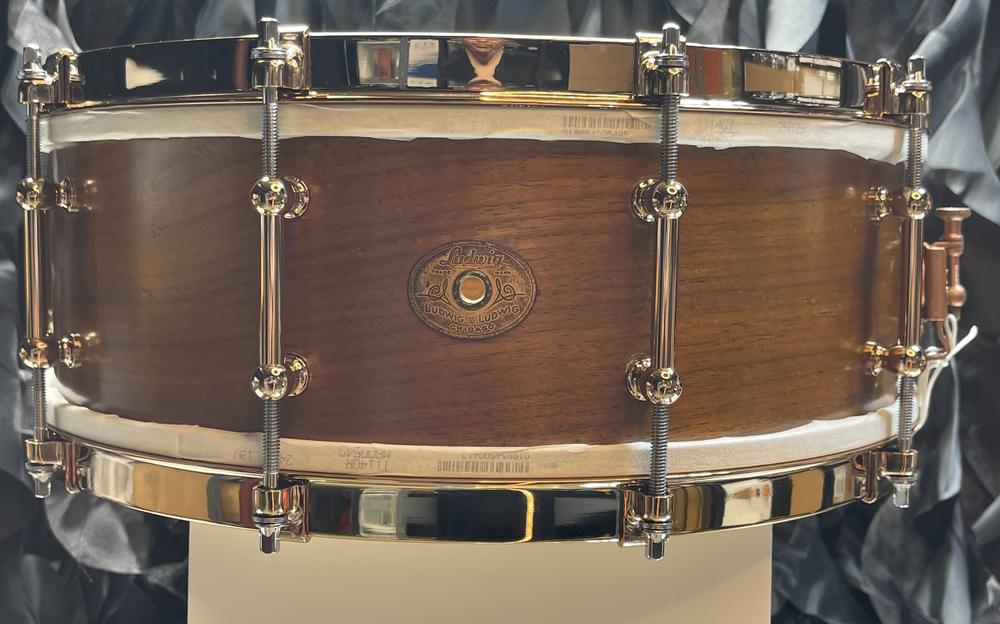
A steam-bent rosewood-over-maple shell from a custom builder, finished and dressed in brass on the bench.
The grain runs long and diagonal across the full width — exactly what a good steam-bent shell should show. A maple interior liner adds brightness and sustain against rosewood's natural dryness, and holds the bearing edges true.
Finishing an oily exotic hardwood turns on the first coat. A 50/50 thinned pass seals the surface, then three to four wipe-on coats of pure tung oil, each given full cure time in a stable 66°F / 47% RH shop before the next. The result is depth without film build — the wood, not a coating.
Brass throughout was the only honest choice for a shell this good. No hardware-store blends.
| Shell | 13″ × 4″ steam-bent rosewood over maple liner |
| Lugs | 10 × 1″ brass tube lugs |
| Hoops | Single-flange, brass-plated |
| Tension | Brass rods & claws |
| Batter Head | Coated single-ply |
| Snare Side | Clear snare-side film |
| Wires | Premium carbon-steel snare wires |
| Finish | Pure tung oil, citrus-solvent thinned |
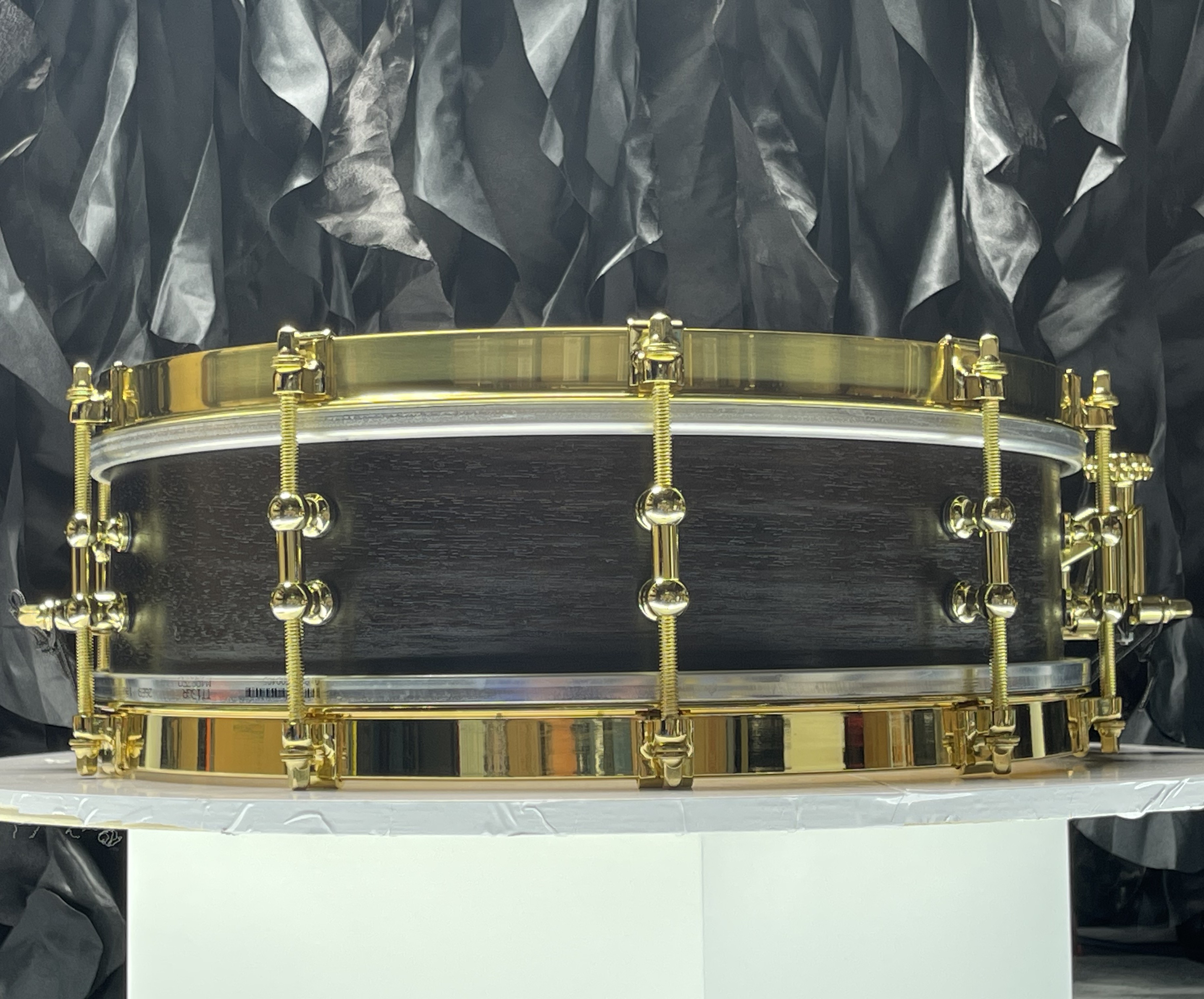
Completed custom snares that have found their players — kept here as a record of the bench.
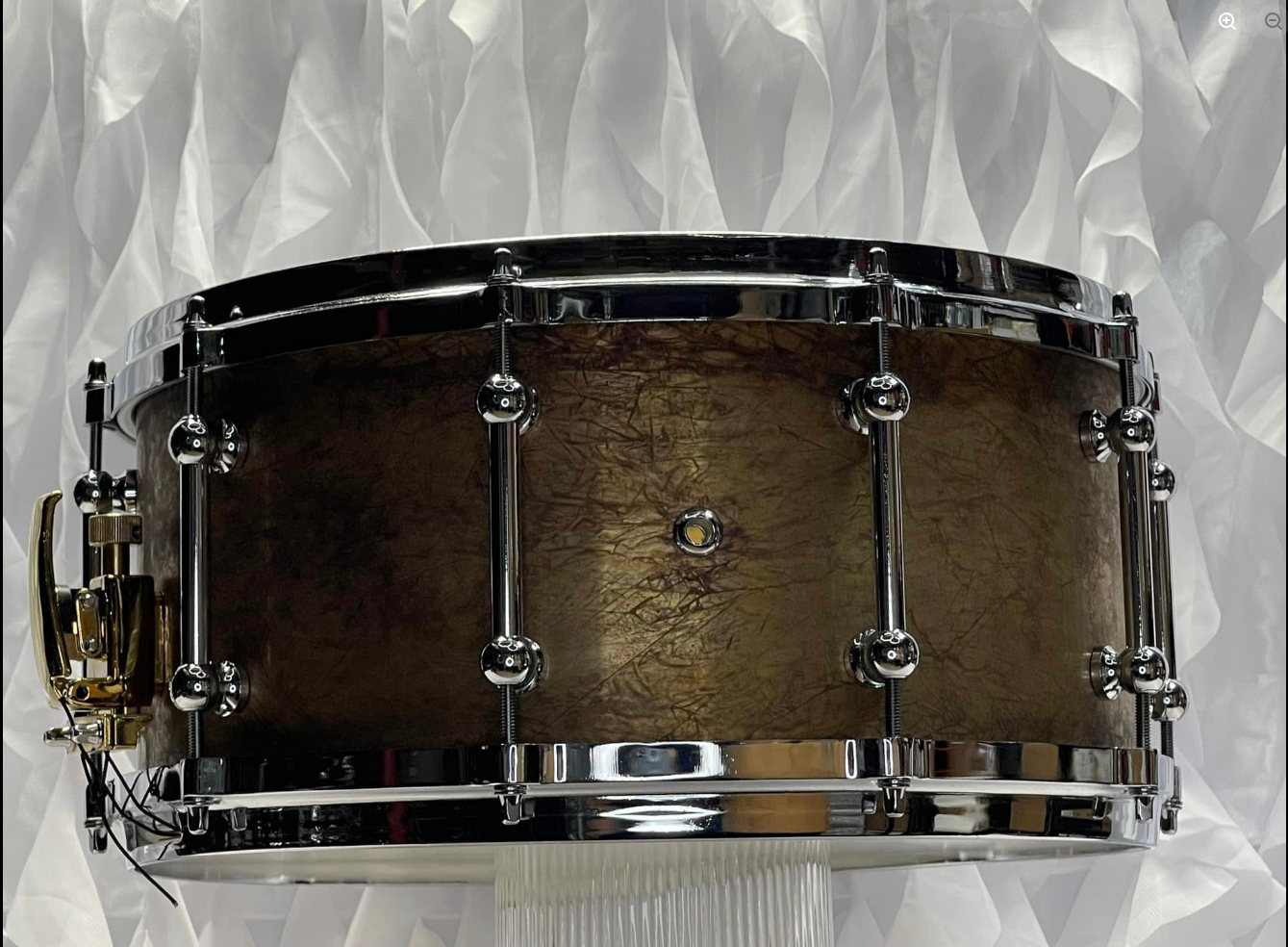
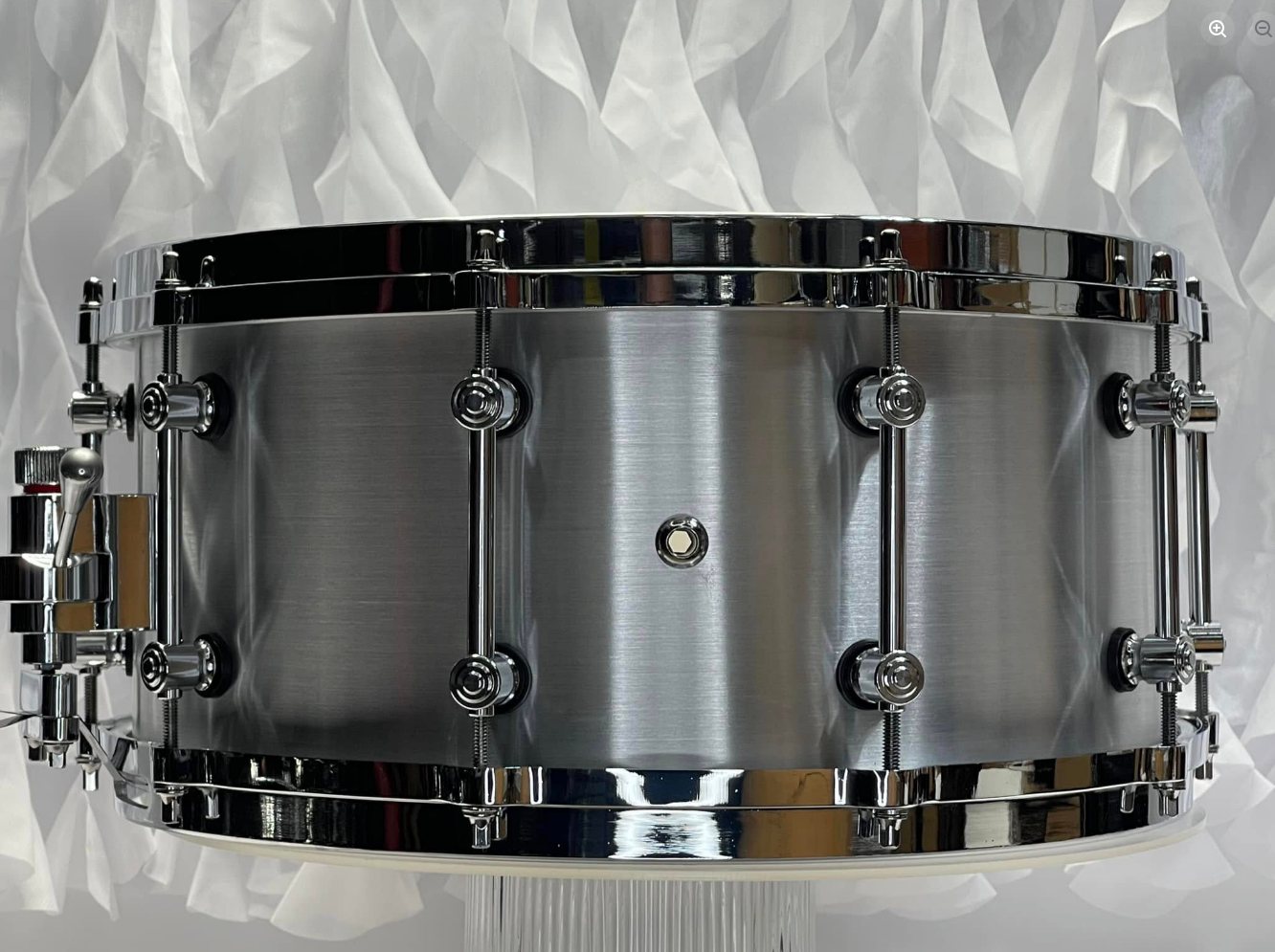
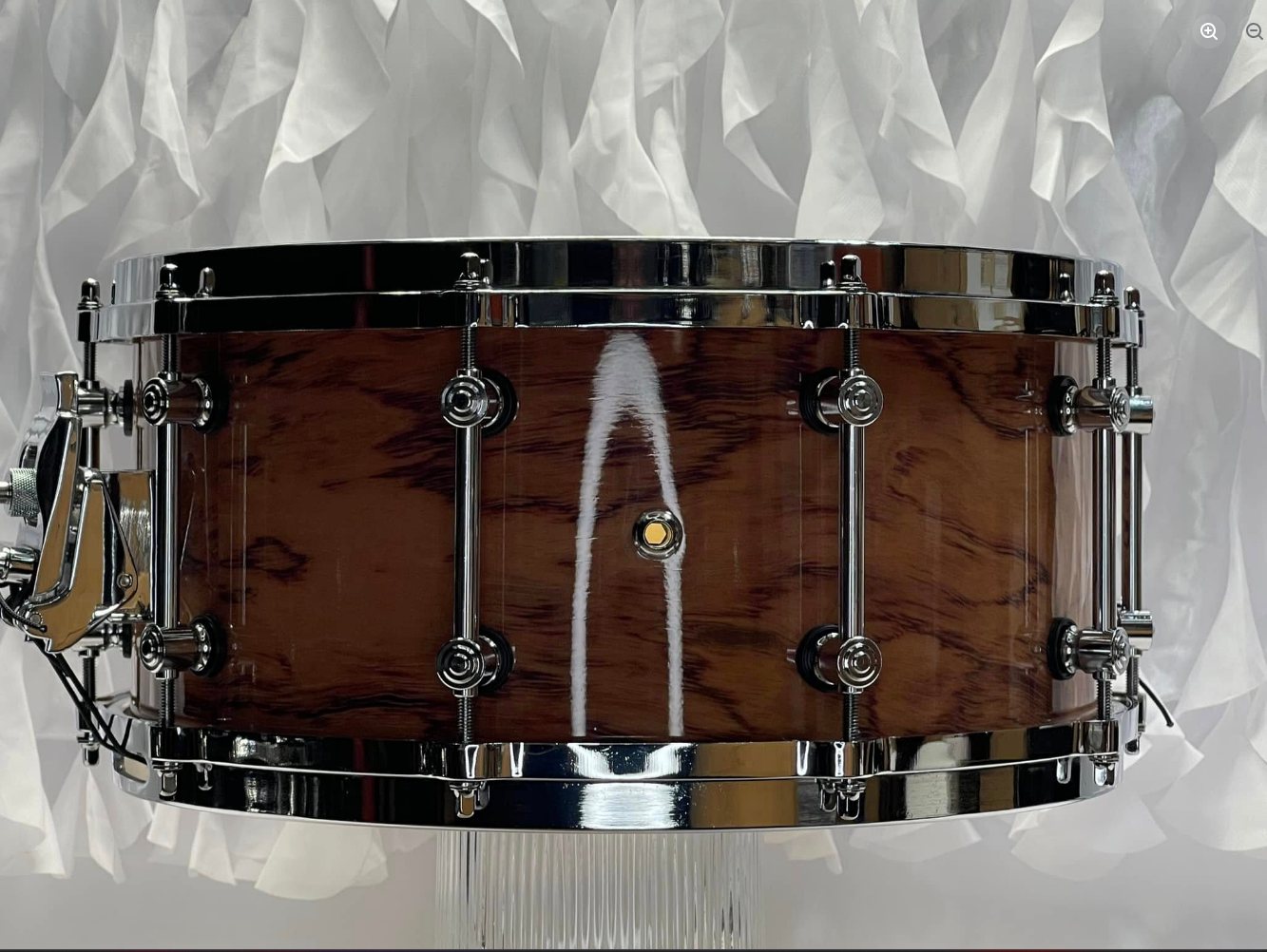
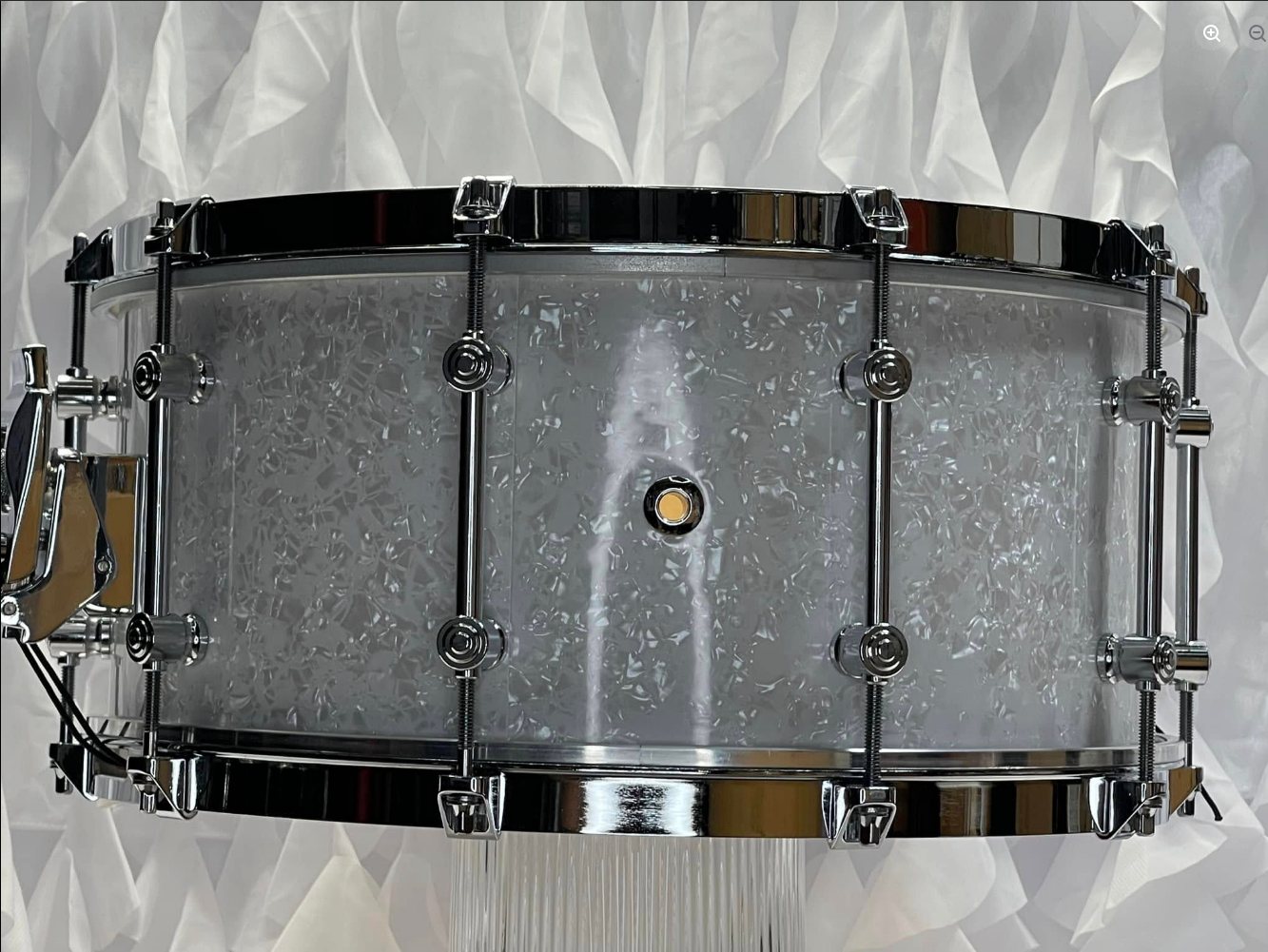
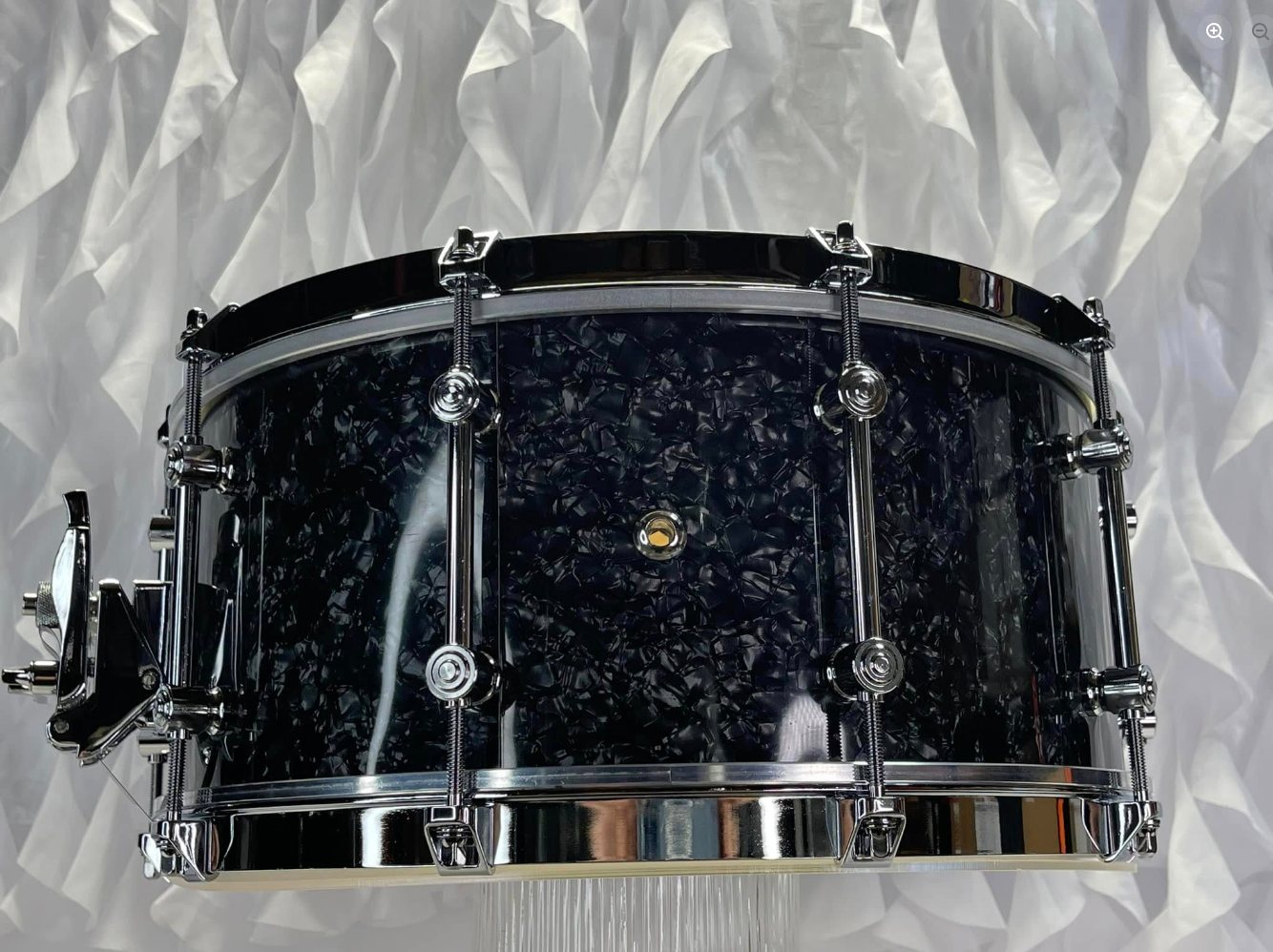
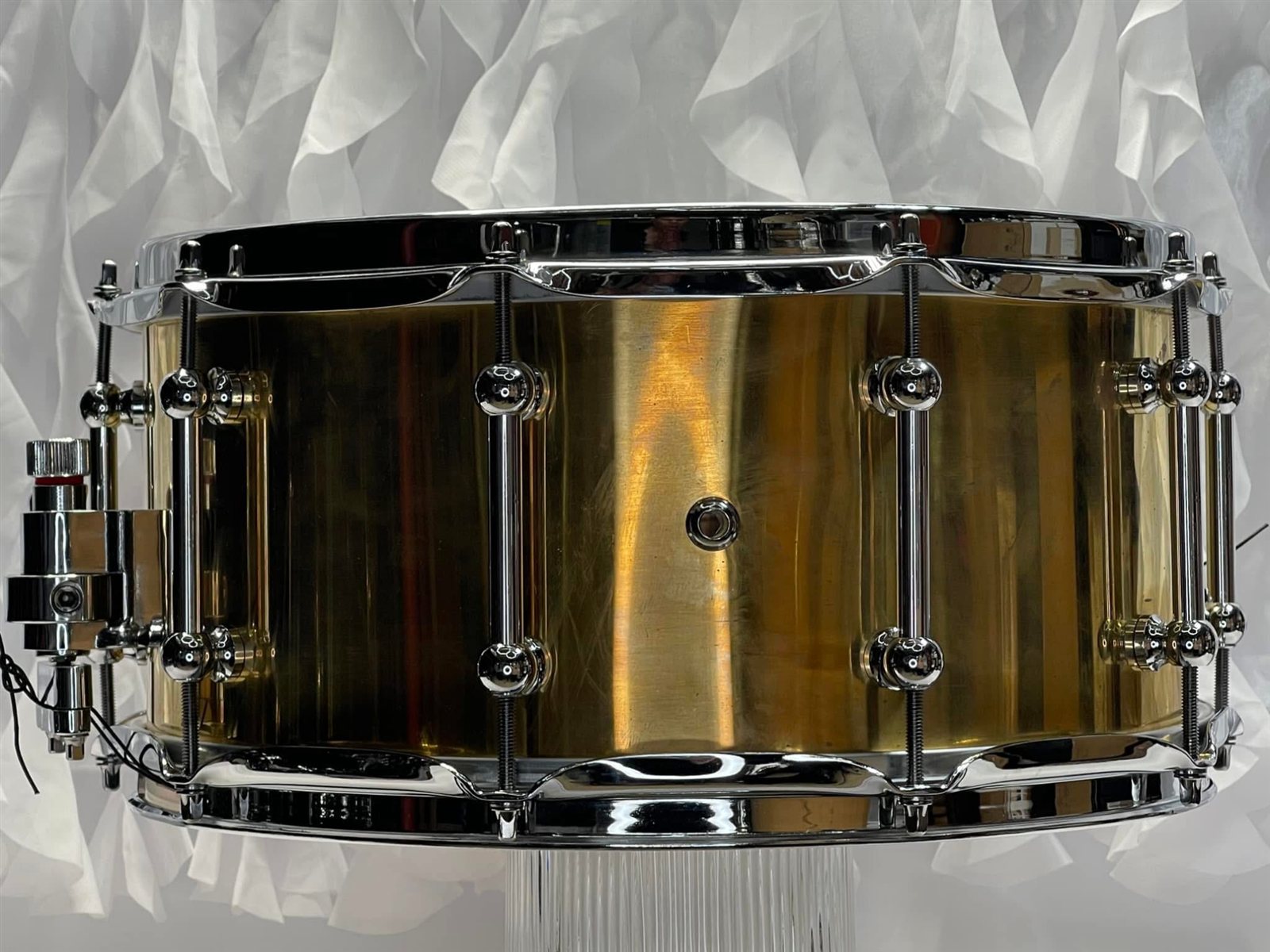
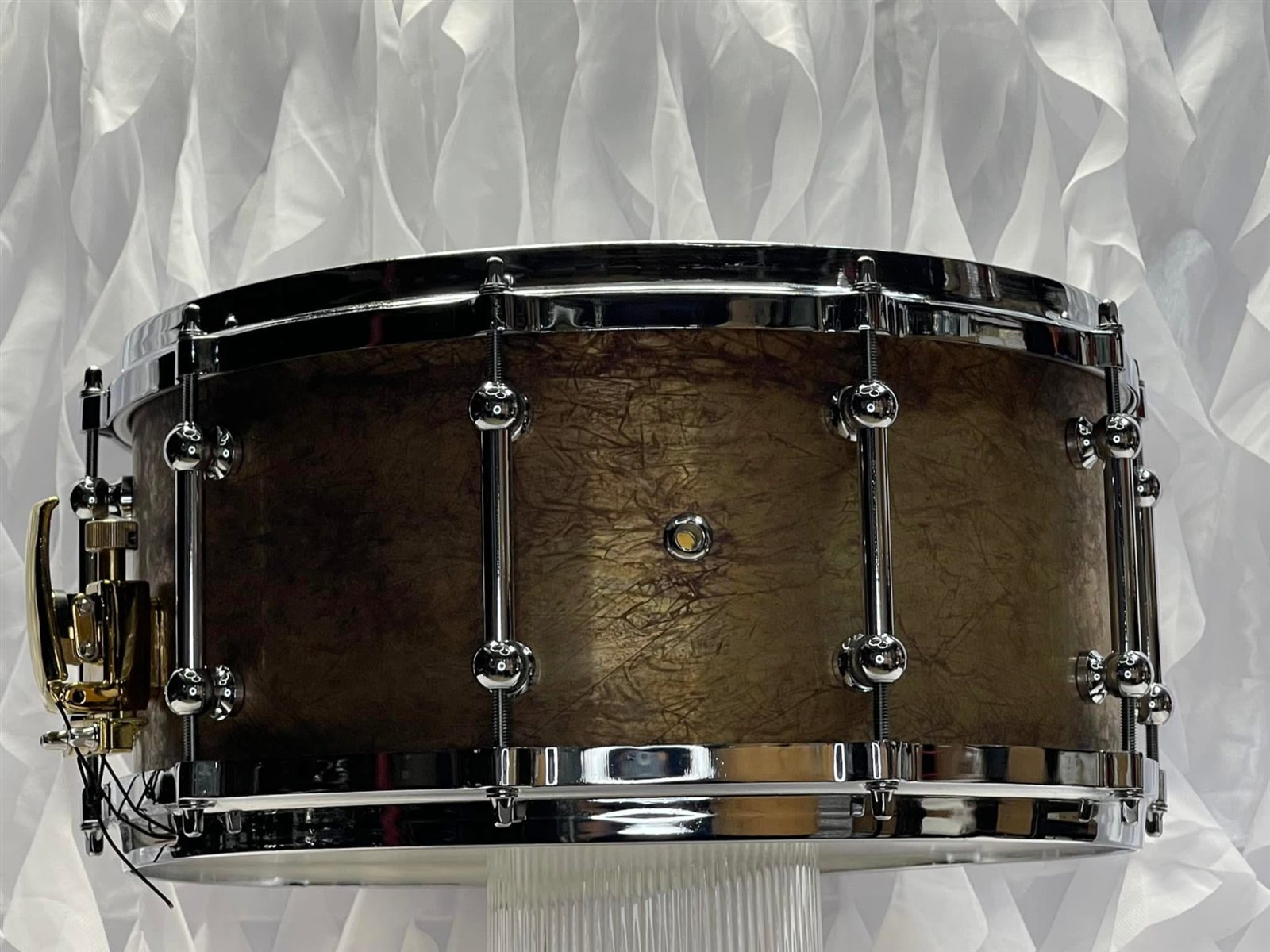
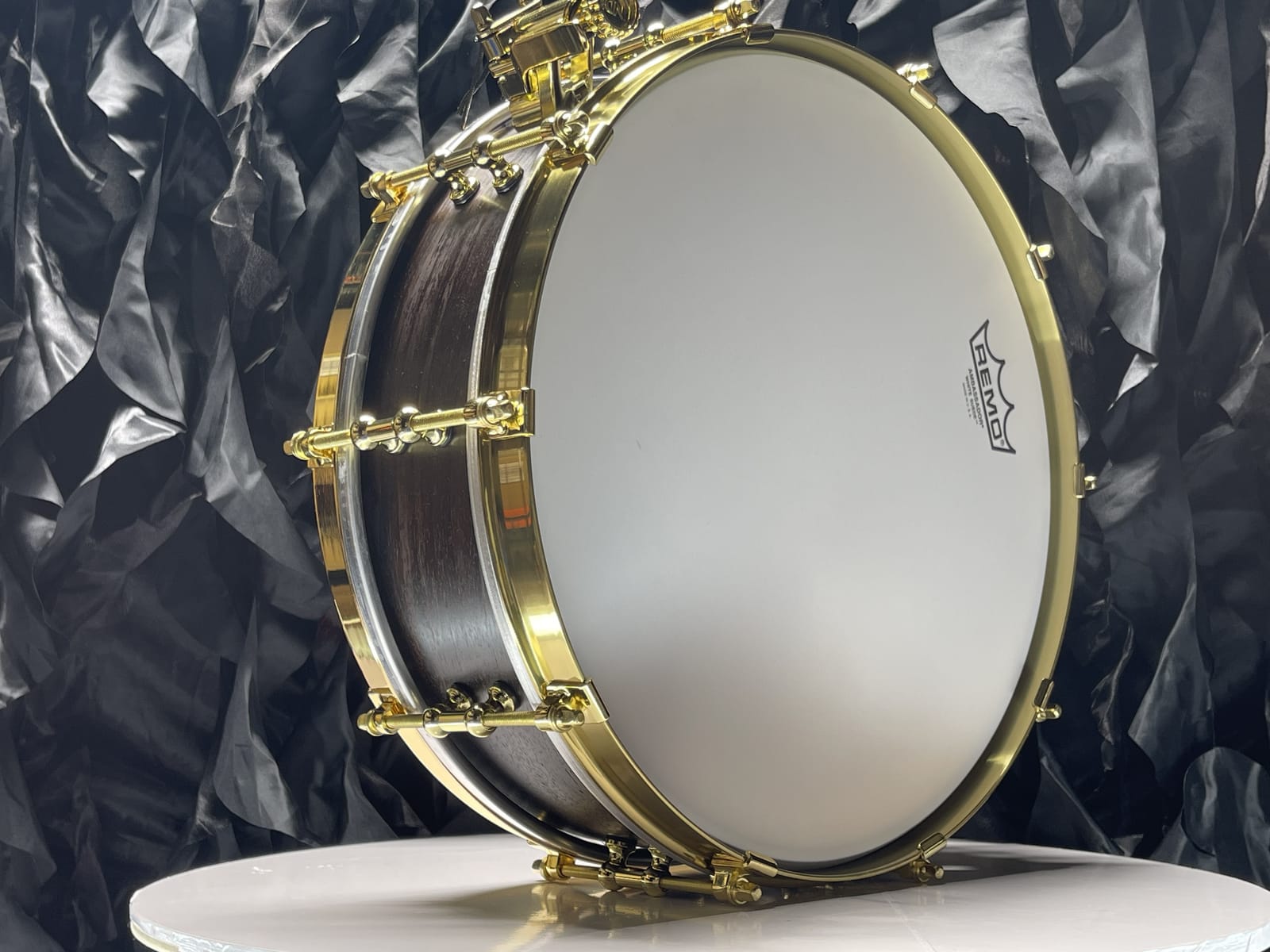
Custom builds offered as they're completed. Each is marked Available or Sold — sold instruments stay listed as a record of the work.
To commission a build or ask about an available snare, use the contact section below.
A running record of restored and preserved instruments. Sold drums stay here as a portfolio of the work.
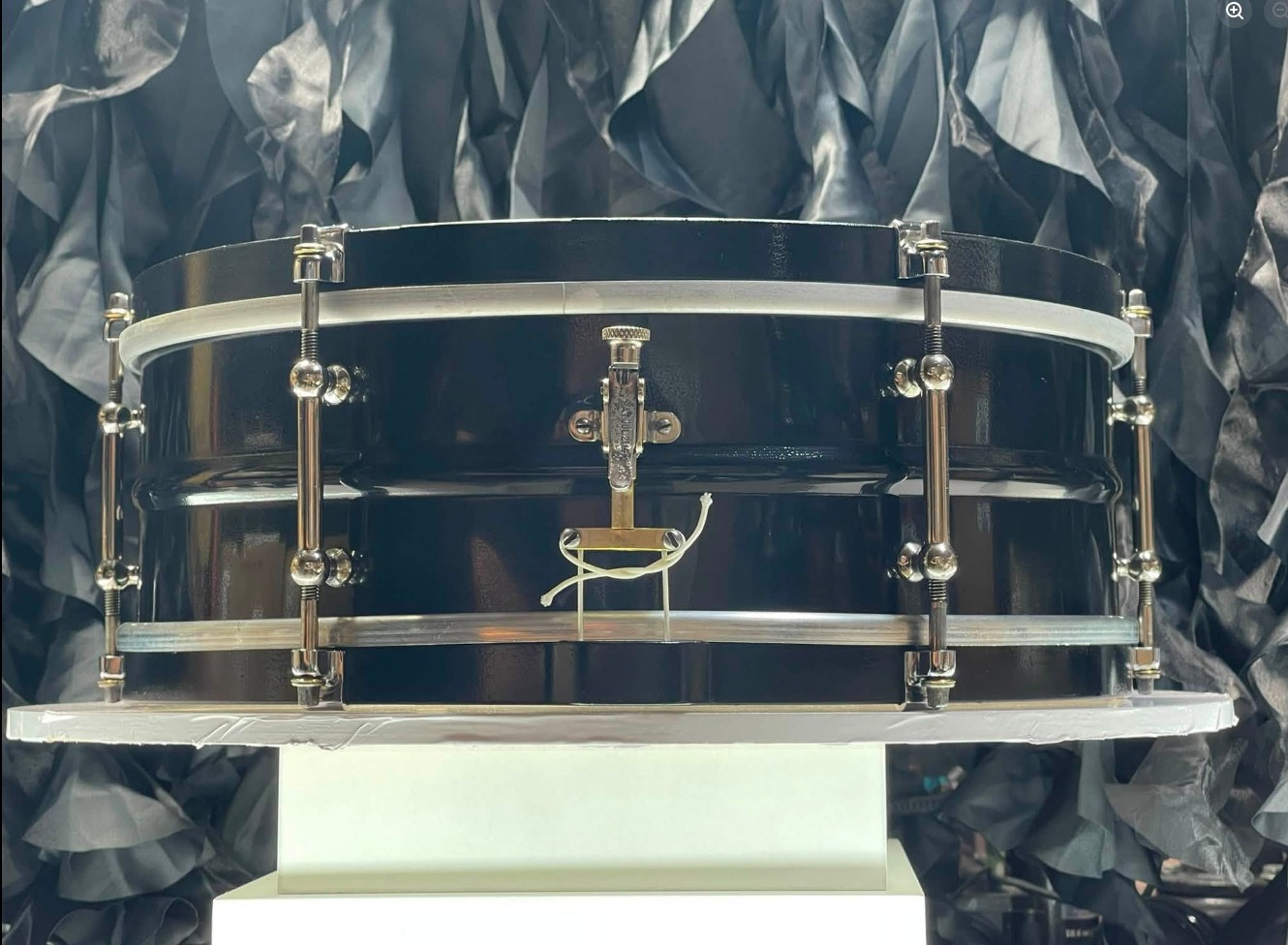
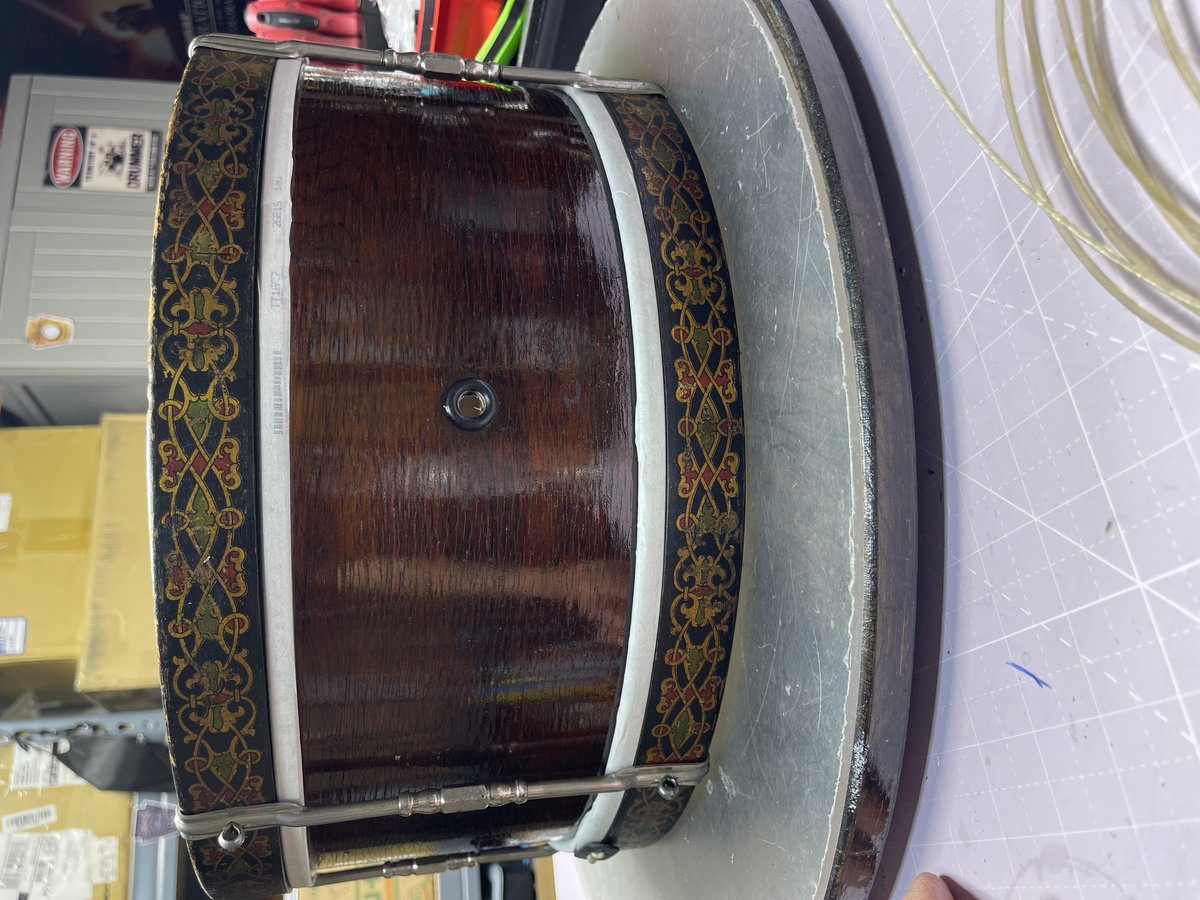
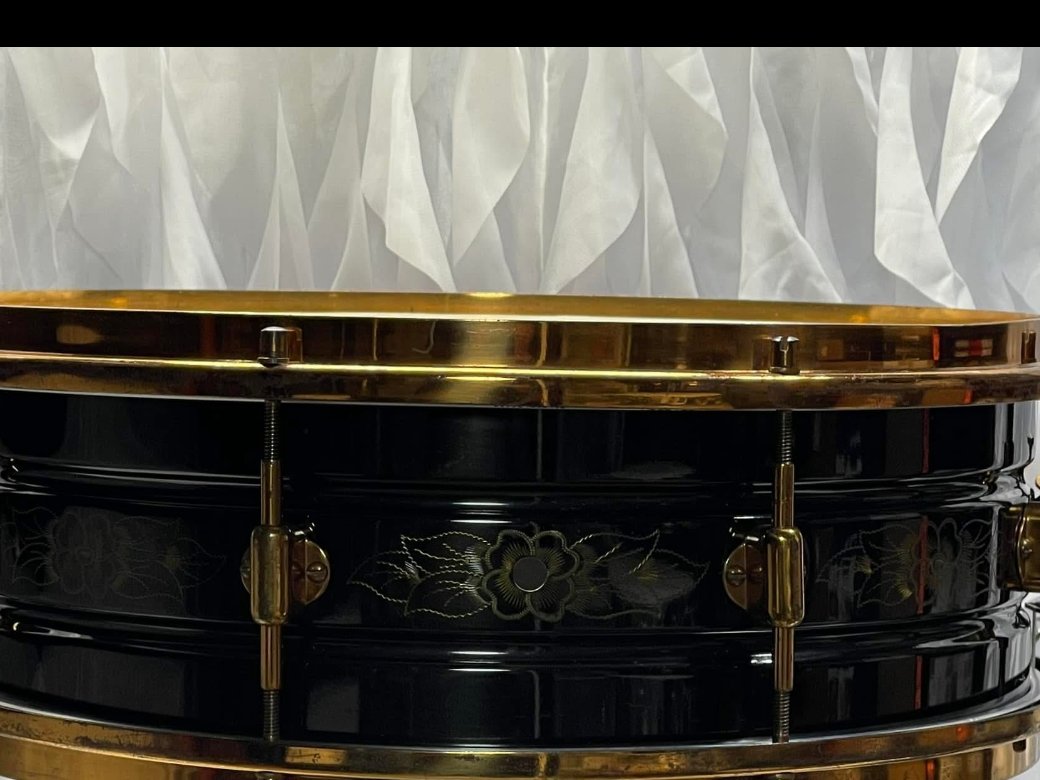
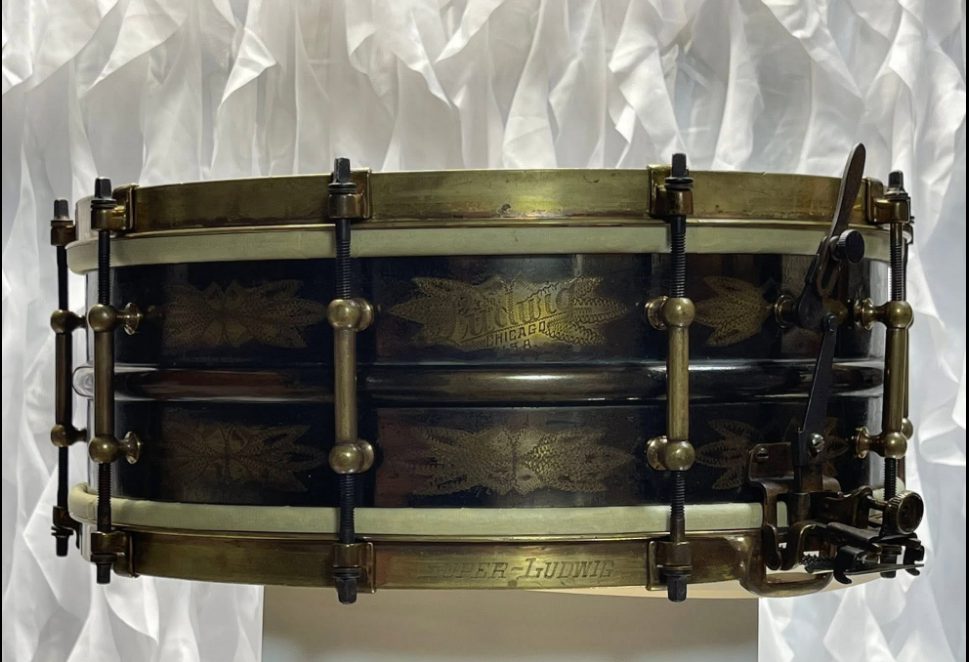
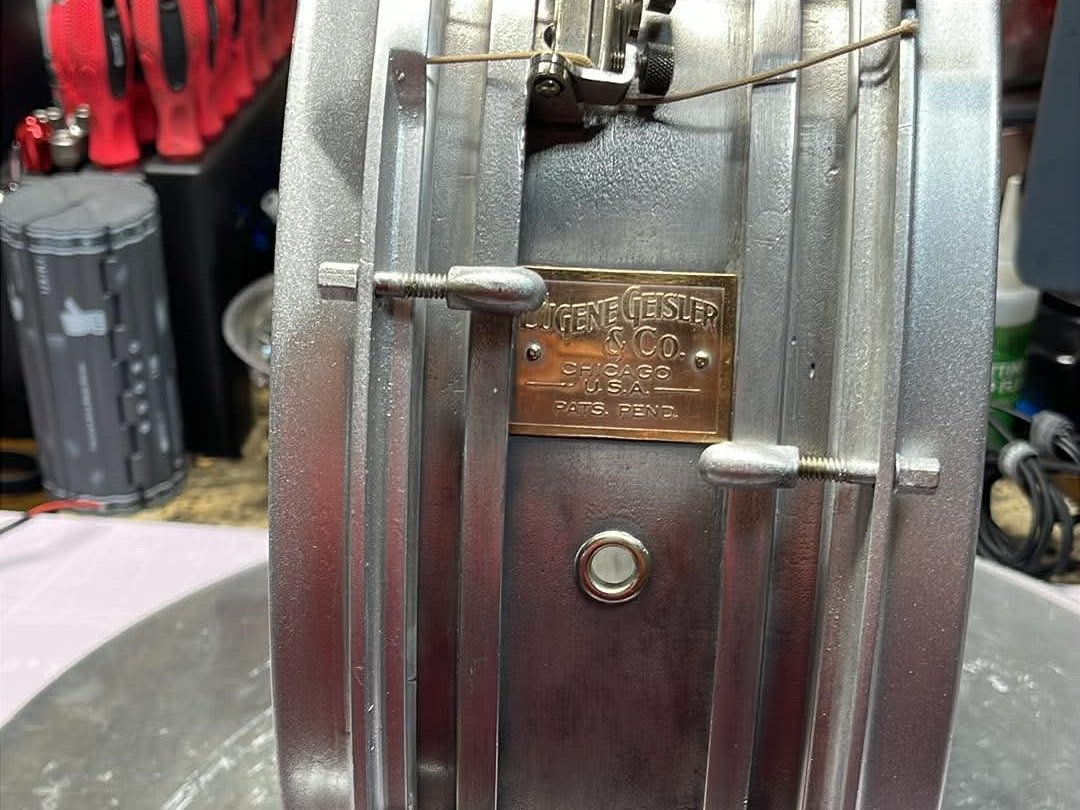
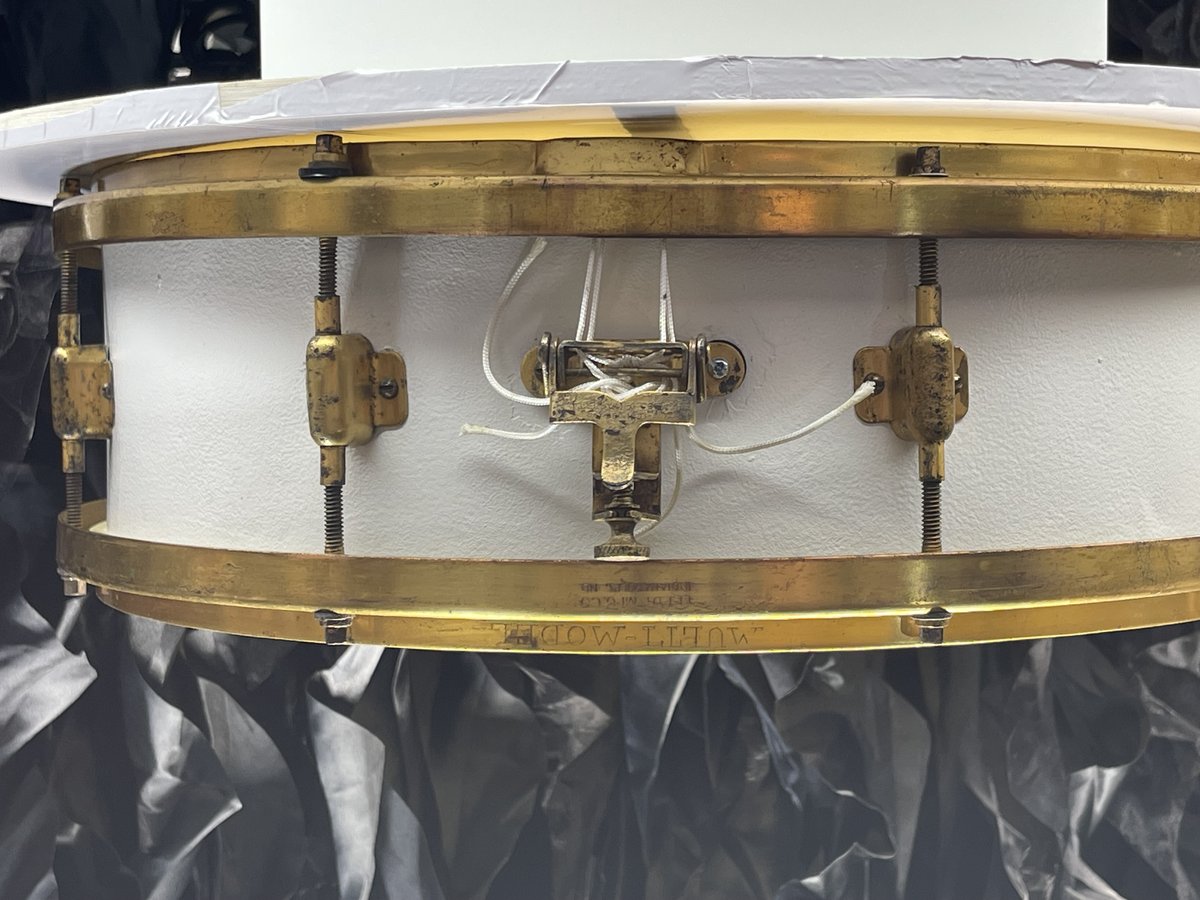
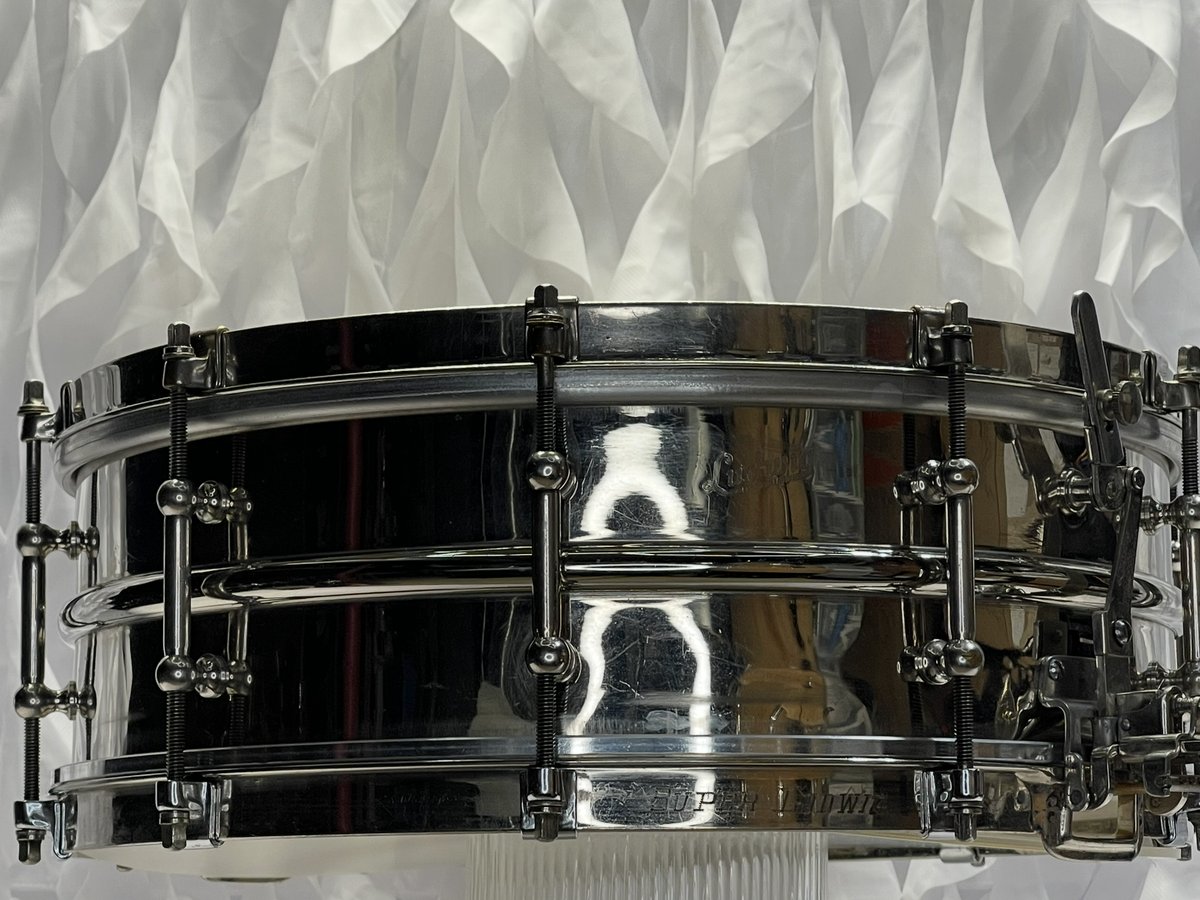
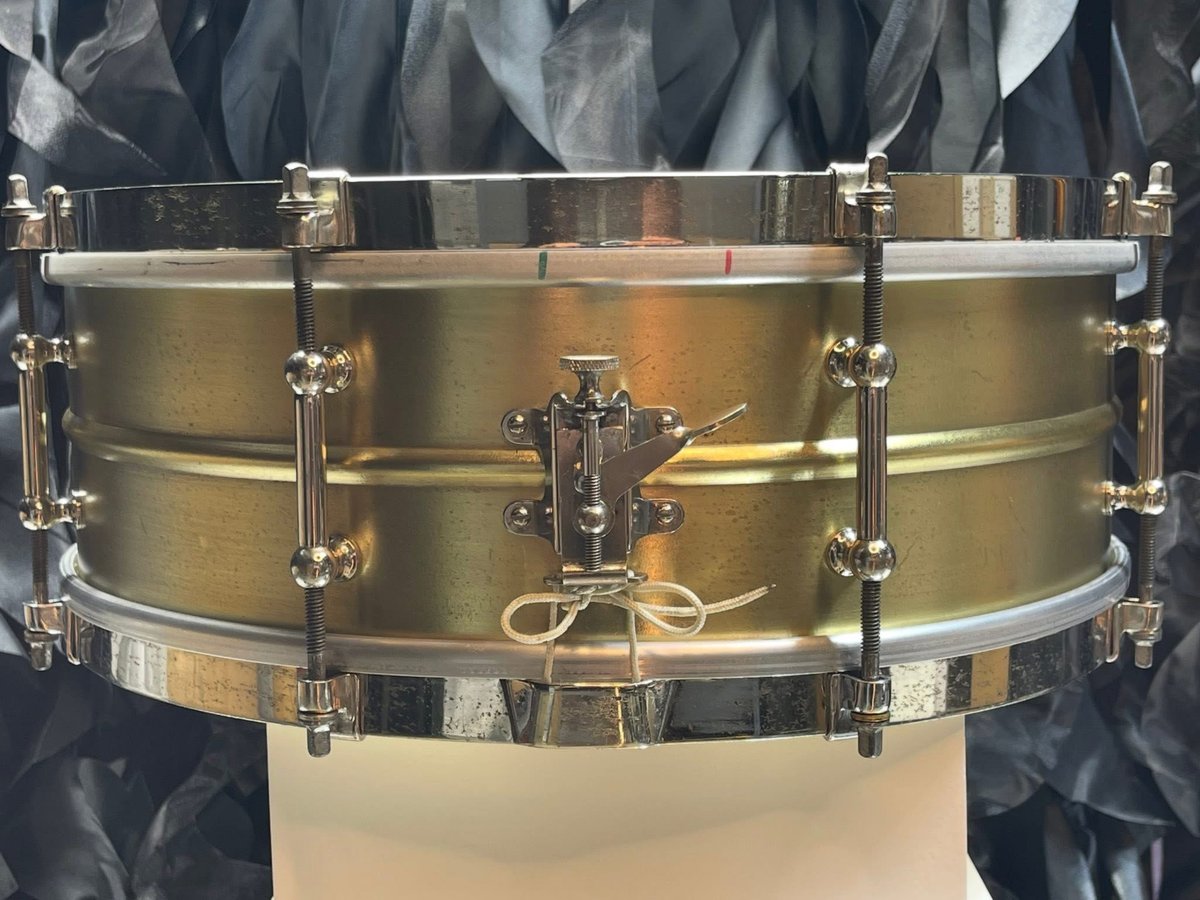
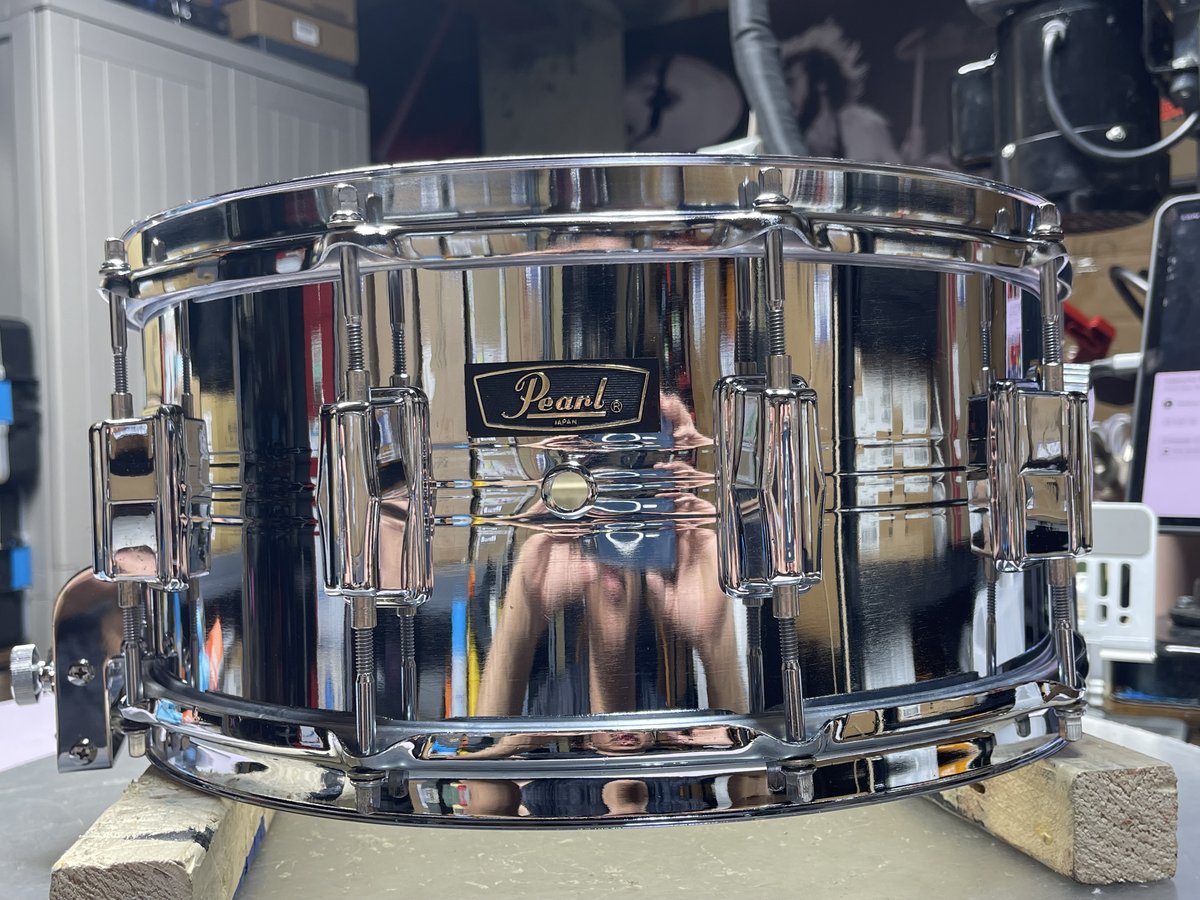
More restorations added regularly — follow along on Instagram and Facebook below.
View the full record →Deep-dive research on individual instruments — provenance, dating evidence, and the reasoning behind each restoration.
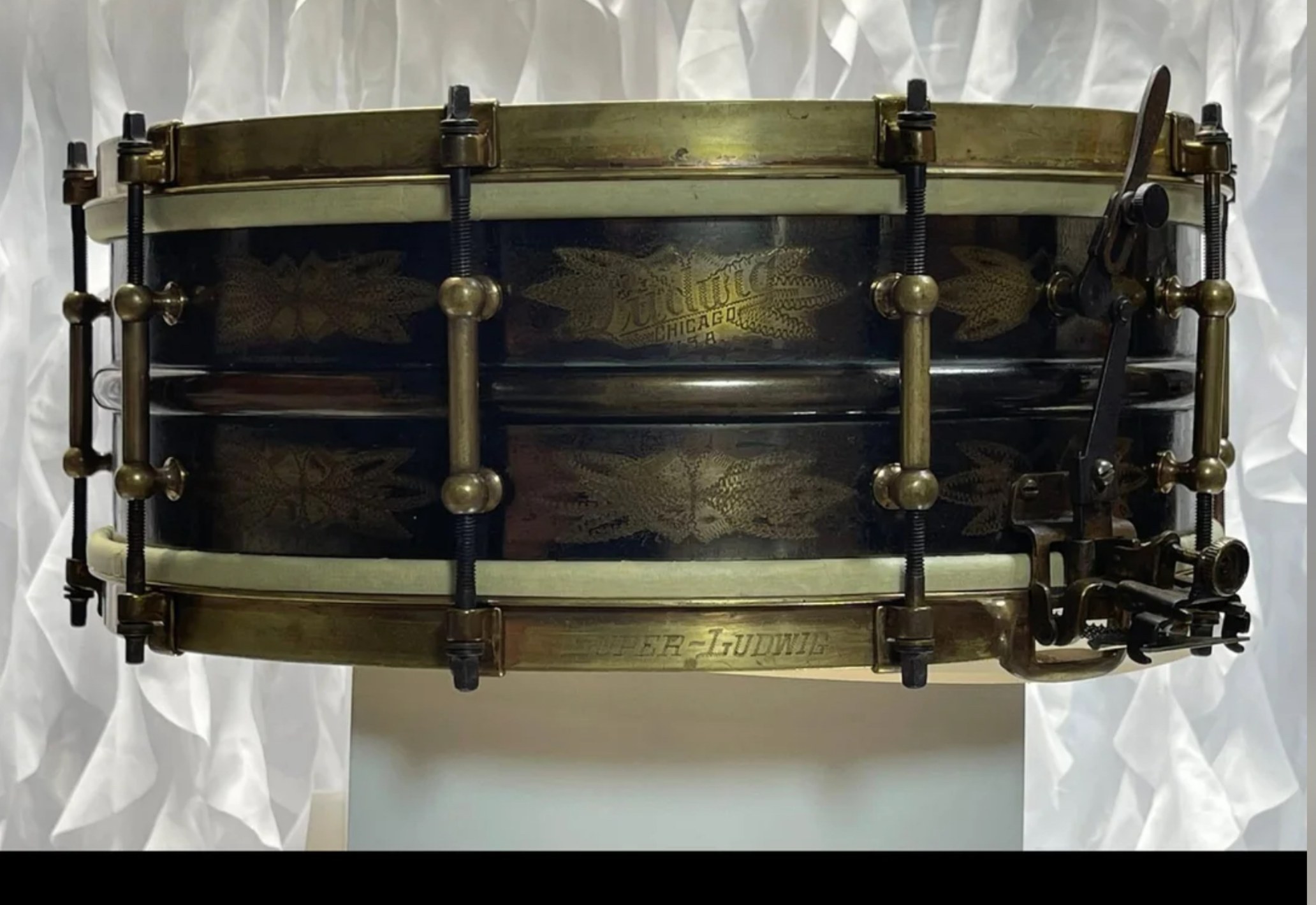
A 5×14 Model No. 231, finished in Ludwig's hand-engraved De Luxe treatment and fitted with the patented Super-Ludwig snare control — restored to playing condition, engraving dated by a period specialist.
Read the case file → Cast Aluminum · Chicago · 1924How a Chicago patent and the birth of the modern drum set left their mark on a single cast aluminum shell — the 1924 banjo-clip patent, and the Liberty and Slingerland lineage it points to.
Read the case file → Cast Aluminum · Dealer-Badged · 1920sA dealer-badged cast aluminum snare from the industrial heart of 1920s Pittsburgh — restored to playing condition, dated by what the hardware itself was built to hold.
Read the case file → Jedson De Luxe · John E. Dallas & Sons · Made by PremierAn oak-shell, white-pearl-wrapped snare documented across four owners and eighteen years — one of two known survivors, with the second located and confirmed in worse condition.
Read the case file → Black Nickel · Indianapolis · 1924An engraved black-nickel-over-brass Leedy Multi-Model from the dawn of the Jazz Age — the model's rise in the trade press, the 1924 Presto strainer, and conservation notes for shells finished this way.
Read the case file → Nickel-Over-Brass · No. 231 · Chicago · c. 1927The drum that tried to solve the snare problem — a 5×14 No. 231 in honest nickel-over-brass, the mechanism behind the pitch, and how its price on the 1927 catalog stacked up against the engraved De Luxe finish.
Read the case file → Black Shell · Nickel Hardware · St. Louis · c. 1917A survivor from before the American drum industry's familiar names took hold — the St. Louis company that patented separate-tension construction in 1883, and a shell built as recorded jazz first reached American homes.
Read the case file → Nickel-Over-Brass · White Knobby Gold Elite · c. 1910–1913A ragtime-era Leedy "Multi" snare from the moment the modern snare drum was still being invented — Ulysses Grant Leedy's player-driven design thinking, and why an intact original hole pattern and stamped hoop matter so much.
Read the case file → Spun Brass · Indianapolis / Elkhart · 1930sA 1930s 14×5 brass-shell Leedy relieved of nearly a century of tarnish and grime — full before-and-after bench photos, and why an honest player's drum is worth more than a museum-case original.
Read the case file → Chrome-Over-Brass · Chiba, Japan · 1976A deep 14×6.5 Pearl Jupiter from the year the "stencil drum" maker announced its own professional line — the Sumida-to-Chiba origin story, and the rare six-and-a-half-inch depth most Jupiters don't come in.
Read the case file → Manufacturing History · c. 1854–TodayBefore laminated shells became the industry default, snare shells began as a single steam-bent board — how Leedy, Ludwig, and Slingerland built and sold them, and why the method never actually disappeared.
Read the full history →Ask ten collectors what a drum is worth, and you'll get ten guesses — most from photos, none accountable, none you can hand to an insurance adjuster or an estate attorney.
A Reflections appraisal is different. Every valuation is backed by documented sold comps — local drum shops, Reverb, eBay, and Chicago Drum Show records — not recollection or feel. Every report discloses condition honestly: what's original, what's been restored, and what that means for value. And every appraisal carries the name of someone who's published drum history research for Not So Modern Drummer and staked a business on getting the identification right.
This isn't a forum opinion. It's a written report you can use — for insurance coverage, an estate, a sale, or simply knowing what you actually have.
Every appraisal includes the comps used and the reasoning behind the number — so you're not just getting a figure, you're getting the case for it.
Pricing varies by drum, condition, and whether an in-person inspection is needed. Reach out below for a quote.
Teardown to reveal, appraisal notes, and the occasional new build — across every channel.
Send photos of the shell, the badge, and any hardware — plus a maker and serial if you have them. You'll get an honest read on what it is, what it's worth, and what restoring it would take.
Send an email →Case files, before-and-afters, and the occasional appraisal note — straight from the bench. No spam, unsubscribe anytime.
New restorations, case files, and appraisal notes — sent when they happen.